I read The Little Stranger by Sarah Waters four years ago and it became one of my top gothic horror novels of all time. It had everything: a decaying Georgian mansion, a struggling family loaded with secrets, and a vengeful child ghost on the loose. Best of all, Waters wove in doubts of every characters’ narrative reliability and trustworthiness. Everyone could be lying or all could be mad. It was impossible to know, even at the hair-raising end. The Little Strangers is an ultimate gothic read, following in the tradition of Henry James, Daphne Du Maurier, and Shirley Jackson.
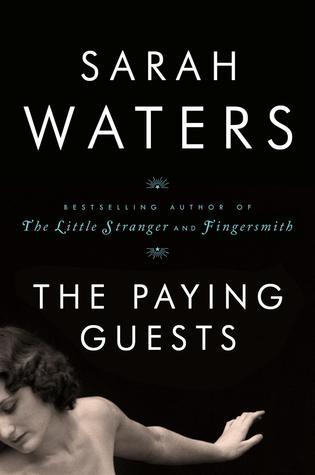
Waters’ newest novel, The Paying Guests, does not disappoint. This time the point of view is from Frances Wray, a young woman living in post-WWI London. Frances and her mother live alone in a huge rambling villa; Frances’ brothers died in WWI and her father passed away shortly after the war, leaving his wife and daughter in straightened circumstances due to bad investments. Frances is forced to run the villa on a tiny income. She is maid, cook, and seamstress all in one. Duties include scrubbing stone floors on her hands and knees, dusting the heavy faux Jacobean furniture, and wrestling with three cooked meals per day. It’s an exhausting endless job but despite the drudgery, Frances finds moments of quiet satisfaction.
It is in these moments of every-day activity that Waters’ sensitive and living prose shines out like a star:
The first, wet rub was important for loosening the dirt, but it was the second bit that really counted, passing the wrung cloth over the floor in one supple, unbroken movement…There! How pleasing each glossy tile was. The gloss would fade in about five minutes as the surface dried; but everything faded. The vital thing was to make the most of the moments of brightness. There was no point dwelling on the scuffs…She had—what did she have? Little pleasures like this. Little successes in the kitchen. The cigarette at the end of the day. Cinema with her mother on a Wednesday. Regular trips into Town.
Wray’s gentle satisfaction breaks the monotony of her life, but her loneliness remains. Desperate to crawl out of debt, Frances and her mother decide to rent out the upper portion of the house. A young married couple, Leonard and Lilian Barber, move in. And it is in the hallway, stairs, and landing that the drama unfolds. Frances and Lilian slowly fall in love in the mundane locations where they meet as Frances cleans and scrubs.
“I pay attention to women’s history,” Sarah Waters said in an interview with the Independent. “To their secret history and lives, acknowledging meaning in their domestic lives.”
Away from the bustle of the outside world and gaze of men, Frances and Lilian carry out their love story. Their day-to-day lives and jobs are dismissed as “women’s work”, and under this cover, they pursue a passionate love affair, unsuspected by everyone including Lilian’s husband, Len.
Tragedy ensues when their love is announced to Lilian’s husband—followed with violent repercussions and public notoriety. The women are catapulted into the public gaze. But even then, their daily hours slowly keep on, measured out by clocks in the kitchen and tiny quiet moments behind bedroom doors. Domesticity continues on even after tragedy. The meals must be made, the furniture dusted and floors scrubbed. It is the fabric of life for all of the novel’s women, whether they work out of the home or in. They may resist or cherish it but in the end, domesticity remains the essential bedrock of life.
It is Waters’ ability to convey two opposite feelings about home life, both cherishing love and heavy repulsion, that gets at the very heart of gothic novels. And while The Paying Guests has no ghosts, it does have doubt, suspicion, entrapment, a deep desire to escape, and murder—all the necessary ingredients for a good gothic read.
Frances Wray’s growing doubt of the honesty of those who surround her, even her own true love, becomes the real haunting in the novel. In the end, only her ability to trust can clear the shadows from her mind. If she chooses to trust, she will be able to cast off the dead weight of an old house and a deceased family and head into a new life with a new home.
The Paying Guests is a massive page-turner, full of creepy undernotes and quiet alarms. Mingled into dark rooms and crumbling façades are complex questions about love, marriage, and domesticity. Waters’ writes from the rich tradition of “women’s novels,” a group that’s been reviled for centuries, ever since women have written to notice and acclaim. She goes where our writing foremothers’ could not go, for fear of abuse and violence in their own time. Waters sheds a light on a secret world, bringing us missives back from an old, silent, and shut-down era. The Paying Guests is one of those novels that sticks. This is due to Waters’ living prose and from the resulting feeling that writing evokes, but also from the illumination she brings to a formerly shadowed and silent area of women’s lives.
Catherine Eaton is a contributor to The Stake. Catherine is a writer living in a western suburb of Chicago. She blogs over at sparrowpost.com and enjoys foraging around the neighborhood in her spare time.
