The Stake

recognizing the best and worst in pop culture

  • Movies
  • TV
  • Books
  • Comics

How to catch up on The X-Files without watching all 202 episodes

July 16, 2025 by Andrew DeYoung Leave a Comment

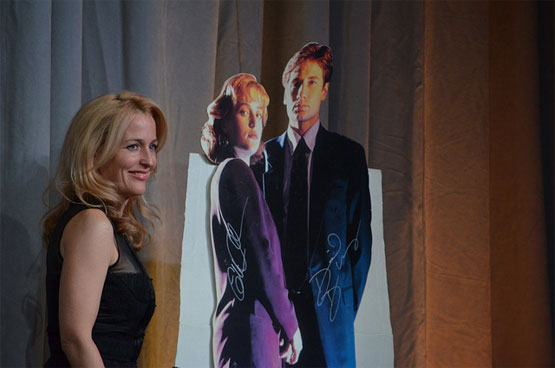
The X-Files is one of the best science fiction series to ever grace our television screens—and in January, it will be coming back to Fox for a miniseries event.

For fans of the series and of awesome sci-fi storytelling, that’s great news.

But it also poses a vexing question: Should we rewatch the old seasons before the new series airs? Or, for people who’ve never watched The X-Files before and want to know what all the fuss is about—will they have to watch the whole thing before the new season airs to figure out what’s going on?

The answer is: we don’t know. I can’t imagine Chris Carter, much less the bigwigs at Fox, would want to make an X-Files miniseries where watching everything that preceded it was a prerequisite. Nonetheless, Fox is giving viewers the opportunity to watch every single episode before the new season premiers, in a 201-day marathon that already began in early July.

201 days, 202 episodes. And two movies! That’s a lot of TV—even if you stream it on Netflix or Amazon Prime, where the show is available to subscribers, that’s more than 150 hours of The X-Files.

And—here’s the rub—not all of it is very good. When you make that much TV, some of it will be great, some of it will be good, a lot of it will be mediocre, and some of it will be complete crap. And with more great TV available than ever before, much of it at the click of a button, nobody has time to waste watching episodes that just aren’t that good.

What’s a viewer to do? Well, whether you’re already an X-Files fan who just needs a refresher on the high points of the series, or someone who wants to experience the show for the first time, there are ways to catch up on the series without watching all 201 episodes. I don’t have an episode-by-episode viewing plan for you; look at this more as some advice for how to get caught up on the series with as little time commitment as possible, getting the most mileage out of every episode you watch.

First thing you need to know is that X-Files episodes come in 2 varieties: there are mythology episodes and monster-of-the-week (MOTW) episodes. MOTW episodes are standalone; mythology episodes follow an ongoing storyline.

We don’t know what the miniseries is going to look like, but odds are good that it will lean heavily on the existing X-Files mythology. There’s a list of the X-Files mythology episodes on Wikipedia, taken from The X-Files Mythology DVD sets (still available for sale in four volumes!), and from books about the series.

By my count, there are 72 episodes in the X-Files mythology—that already brings down your commitment by more than half. And you guys, the mythology stuff is so good. Mulder’s backstory, the alien abduction of his sister Samantha, Scully’s abduction and later illness, the Cigarette Smoking Man, Krycek, Tunguska, black oil—I get chills just thinking about it. If you’re watching this stuff for the first time, I envy you.

That said, not all of the mythology episodes are awesome. Hardcore X-Philes may disagree with me on this, but the series didn’t get off to a great start: the first couple seasons have low production values, and even the acting and writing don’t really lock into place and get good until somewhere around season 3 or 4. That said, very few of the early mythology episodes are truly skippable, and if you can get past the ’90s production values and stilted dialogue, there’s some really interesting sci-fi storytelling at work here. Plus, these early episodes introduce major characters and backstory that will become important later, during the bonkers good episodes in Seasons 3 through 6, so it’s worth it.

The X-Files stumbled a bit in later seasons, too. A major mythology plotline wrapped up in Season 6, and from there it wasn’t immediately apparent where the story should go next. I remain convinced that it might have been better if the show had wrapped up all its loose ends and ended in Season 6—and had the show been made today, it may have been allowed to do just that. There are still some great episodes in Season 7—I’m particularly fond of the “Biogenesis” and “Sixth Extinction” arc that spanned Season 6 and 7. But then, at the end of the season, Mulder/David Duchovny reduced his time on the series, was replaced by a new character, and things started to get even rockier from there.

Still, there’s some good stuff in Season 8 and 9, and I doubt that the miniseries is going to pretend that none of it happened. You’ve come this far, may as well finish what you started.

OK, next: the movies. There are two X-Files movies: Fight the Future and I Want to Believe. Watch the first one, not the second. Fight the Future is mythology-heavy, and takes place between Seasons 5 and 6, when the show was at its absolute best. I Want to Believe released after the series ended, and is completely skippable.

So that takes care of the mythology. Roughly 72 episodes and one movie.

But what about the monster-of-the-week episodes? They were a big part of what made The X-Files great, and whether you’re experiencing the show for the first time or revisiting it, you’ll want to watch some of them. At their best, the MOTW episodes were great little short films: some scary, some funny.

Here, I’d recommend letting the Internet be your guide. There are plenty of lists of the best standalone episodes of The X-Files just a Google query away. The episodes included in these lists may vary, but most will include series highpoints like “Jose Chung’s From Outer Space,” “Clyde Bruckman’s Final Repose,” and “Bad Blood.” I’ve personally got a weakness for “The Post-Modern Prometheus” and “Small Potatoes.” Vince Gilligan, later showrunner of the series Breaking Bad, wrote a number of the show’s best episodes; one in particular, “Drive,” pairs Gilligan’s writing with Bryan Cranston, who’d later play Walter White. I’d also recommend consulting the Global Episode Opinion Survey online, where users can vote on the best and worst episodes of their favorite shows; their rankings of the best X-Files episodes, I think, are pretty reliable.

So: 72 episodes, one movie, with a handful of the MOTW episodes sprinkled here and there. Doable? I think doable.

Using these tools, you should be able to cobble together a decent X-Files rewatch or watch-for-the-first-time plan that gets you as far as possible in the least amount of time.

Follow The Stake on Twitter and Facebook

Filed Under: TV, Featured Tagged With: David Duchovny, Gillian Anderson, X-Files

A note on Gillian Anderson’s Reddit AMA

October 14, 2025 by Christopher ZF Leave a Comment

That Gillian Anderson is a talented actress is hardly news. As a long-time fan of Gillian Anderson, I still from time to time am surprised to remember just how good she can be. This is, of course, something Stake readers already know. We are a people of discerning tastes.

But here’s something you may not know about Gillian Anderson: she’s very funny. If you’ve watched The X-Files, you probably know this. But if you know Anderson’s work mostly from the past decade, or met her in her most recent BBC America program, The Fall, you may be surprised at the news.

So if you are out there and you are not aware, and perhaps you are directing Ghostbusters 3, take note of her answer to one fan’s question during yesterday’s AMA on Reddit regarding the new all-female Paul Feig Ghostbusters. Asked whether she’d like a part, Anderson had this to say:

Emphasis (all of it) Anderson’s. I’ll sign that petition, for shiz.

In other news:

Another film in The X-Files series would be tremendous for two reasons: 1) The X-Files is one of the best sci-fi shows ever made, and its continuation is a reason to celebrate, and 2) The most recent film, named The X-Files: I Want to Believe, was just. terrible. Be great to see at least one more.

Filed Under: Movies Tagged With: The X-Files, Gillian Anderson, Sci-Fi, X-Files, Paul Feig, Reddit, AMA, Ghostbusters 3

Gillian Anderson writing forthcoming sci-fi series EarthEnd Saga

January 15, 2025 by Christopher ZF 1 Comment

Gillian Anderson at Comic-Con, photo from Flickr user Gage Skidmore

My love of Agent Dana Scully is real, and noted, and highly transferable to Gillian Anderson. I follow her work, often from a distance (I have not yet had the chance to watch The Fall), but with keen interest.

So I was delighted to hear about the upcoming sci-fi novel series to be penned by Ms Anderson, EarthEnd Saga. The title brings about a fond recollection to Ursula Le Guin’s EarthSea Trilogy, which is just an added mental-bonus. EarthEnd Saga will be co-authord by Jeff Rovin, whose bibliography shows some pretty remarkable diversity.

The series, according to EW and Anderson, will feature a female protagonist, a world-traveling child psychiatrist who specializes in treating kids who’ve suffered trauma from natural disasters and war”, and will distinctly avoid horror. The note about horror is welcome, frankly, as popular sci-fi has of late become too closely married to horror and superheros, in my opinion. (I love horror and superheroes, but it’s always a pleasure to see high-concept sci-fi stand alone).

EW has more on Anderson’s journey to the writing life:

Anderson – whose favorite authors include Ann Patchett, Elizabeth Strout, and George Saunders – said she knew what she didn’t want as much as she knew what she wanted. “It was a very clear to me that I didn’t want to enter into the horror realm. That doesn’t interest me,” she says. “I also wanted a very strong female character, around my age. I would want to read something like that and I think other women would like to read.” She adds that the nature of the storytelling world is such that future books “can go into many different directions, and follow different characters in different age groups the people can hook into.”

Asked about her sci-fi influences, Anderson says her touchstones run cinematic. “I don’t think I realized or even admitted to myself how much I like science fiction films, which literally began with Close Encounters of the Third Kind,” she says. The books are being written with an eye toward possible film adaptation. “Not to get ahead of ourselves,” she says with a laugh. “Our goal is to write a great series of books. But the opportunity is quite large, and hopefully we can create something that translates well into other media. I tend to act in more heady stuff. Period films, dramatic, tortured heroine things. So this could be something interesting and fun that can be added to the mix of things I do.”

Interesting to hear Anderson’s personal revelation of her love of sci-fi cinema, as she’s an icon of the genre herself from one of best sci-fi television shows of all time. And though writing books with film adaptations in mind rarely results in high-literary achievements, until we see what might come of the EarthEnd Saga, there’s little reason to let skepticism ruin my excitement.

The first book in the series, A Vision of Fire, and will be released this October by Simon451, a new Simon and Shuster imprint “devoted to literary and speculative fiction across all genres.”

Filed Under: Books Tagged With: Gillian Anderson, Sci-Fi, X-Files, EarthEnd Saga

Top 5 Science Fiction Television shows

January 15, 2025 by Christopher ZF 14 Comments

One of the things The Stake is interested in is rounding out the parameters of genre, and bubbling up those pop culture properties that set themselves apart. One of the easiest manners to do this is that ever-popular internet format: the list. In an attempt to come to terms with a science-fiction television argument of recent, I endeavored to create a list of the 5 best Sci-Fi shows (I’ve seen) on television. It is hardly comprehensive and based completely on my personal responses (how else can we engage culture but personally?), but it is, to the best I am able, honest.

Andrew and Cat might have something to say about these choices, but here are my Top 5 Sci-Fi TV programs:

5. Firefly (& Serenity)

Whedon’s 14 episodes of Firefly, and the film that followed, are endlessly re-watchable. Which accounts for my love of the show. It may seem silly to put a show that was cancelled in the middle of its premier season on any top 5 list. Oh well. Firefly’s that good. The show is the ultimate in sentimental storytelling, unwilling to balk at that which makes it special: Mal’s unwavering love for his cause and crew, and the exhaustion resulting from being right, and losing anyway.

The universe in which Serenity sails is bleak and cold. The problems of humanity have not progressed towards resolution. Instead, humans ruined ‘earth-that-was’, and used our technology to advance the pursuit of power into the outer reaches of the ‘verse. A frontier western mixed with a space-opera, the entire premise is held up in the relationships between a sentimental captain and his crews’ admiration for this loyalty.

What I learned from Firefly/Serenity is that the world is what it is; we should try to make it better. And we do so by the people you surround yourself with. That may seem an easy lesson, but Firefly’s brilliance is recognizing that it’s extremely difficult. Firefly makes plain this “old-world” sentimentality without sacrificing the humor, humanity or intensity of this short-lived show. Jayne says in Serenity, “If you can’t do something smart, do something right.” That is Firefly.

4. Star Trek: The Next Generation

I have always wanted to live on the future Earth as it is in Star Trek: The Next Generation. In this future there is peace and understanding. Humans don’t spend their lives hoarding money and treasure but contributing something to the betterment of the world and its inhabitants. There’s no hunger, no warring nations, no poverty, not even any television (which would make this list more difficult, yes).

In the formative years of my youth, TNG contributed a visionary picture of a future I had never considered: A peaceful one. A world that need not be violent, where knowledge is the pursuit which motivates our species, and having the most possessions was a pursuit that had long since become outdated. As Picard says, “people are no longer obsessed with the accumulation of things…we have outgrown our infancy.” I want to go to there, still.

TNG is the heady vision of sci-fi tv (as opposed to say, J.J. Abrams Star Trek sci-fi, which is brawny). It’s weird, playful and thought-provoking. And though it may take some time before it gets really great, TNG’s cerebral storytelling separates it from much of what we consume. In fact, the cerebral vision of the world is so central to TNG, that it becomes the subject of the show’s best work; I am speaking, of course, of the Borg. But it will always be the vision of the future that holds me most rapt to TNG; the vision that says humans can evolve beyond our violent, power hungry ways.

3. The Twilight Zone

The lasting impression of The Twilight Zone on my youth is this: the show was terrifying. I remember nights in which The Twlight Zone was so scary that I had to turn off the TV before the story even ended. It is so brilliantly written, with characters rendered so human that watching what becomes of them scared the shit out of me.

Two endings in particular have seared into my brain: The Dummy (still among the scariest endings ever) and A Kind of Stopwatch (last man on earth stuff really gets me). If you’ve spent time watching The Twilight Zone, you already know what the show is capable of, and need no reminder. At its best, The Twilight Zone rivals any science-fiction ever produced. It was political, humorous, controversial, but mostly just scared me to death.

2. The X-Files

Mulder and Scully, FBI. Far as I’m concerned, that’s all one need say about The X-Files. The skeptic and the believer; conspiracy and reason; I want to believe vs. there must be a rational explanation. The relationship of the show’s protagonists is The X-Files.

But you know what’s more interesting? Scully is a Catholic, and Mulder is not a religious believer. This is not an obscure detail; it’s present throughout the series, though never much doted upon. But it’s the kind of detail that re-defines the parameters of The X-Files. Scully’s scientific rationality is always buttressed by the fact of her Catholic devotion. This is probably my favorite character trait of The X-Files, and a perfect example of the complicated-via-simple nature of the show.

The legacy of The X-Files on television, and on American culture in general, is difficult to overstate. It reshaped the modern FBI drama around monster of the week episodes, carrying over a seasonal narrative, building towards a series narrative that we never really understand even as it all unfolds. The paranoia/paranormal FBI aspect of the show made viewers as uncertain as Mulder; we never knew if the FBI or the gov’t as a whole was on the side of our agents, or working against them.

Descriptions like these may sound like the average traits of the television procedural. But they were anything but commonplace before The X-Files. You can see The X-Files in nearly every episode of Buffy The Vampire Slayer, or Fringe, or perhaps most obviously, Bones (which jumped the shark a few years ago).

The X-Files lives and dies, like all of the shows on this list, with its writing. Shot on the cheap with very little by way of sets, costumes, or special effects, the show depended on its characters and stories to compel audiences. Which is particularly difficult for a show that provides almost no resolution to almost any questions from episode-to-episode. And boy howdy, it succeeded. The show’s creators took themselves just seriously enough to make The X-Files the best thing on TV at the time, but not serious enough to wander into parody. The show was equal parts terrifying and hilarious, serious and ridiculous, and it knew perhaps better than any show I’ve seen how to carefully walk the many lines they drew. This is especially true of that central relationship.

1. Battlestar Galactica

Battlestar Galactica is my all-time favorite television show. It contains everything that I love: politics and religion and science, the dangers of mixing politics and religion, the apocalypse, madness and psychology, civics and civil disobedience, the post-apocalypse, and bat-shit crazy sci-fi goodness. And its all dressed up in the unblinking seriousness of a funeral. If I were to make a list of the best political television programs ever, it would be on the top 5. Also, top 5 shows about religion.

BSG is complete in its conception, and executed with guile. Each of the central characters (and there are many) is provided room for growth (not always taken) and opportunities for failure (pretty much always taken). It’s character concepts are astonishing; the arc of Gaius Baltar is reason enough to put BSG on the top of any list of the best television shows. So says I, anyway.

In the years since I first completed BSG, the show has become a keystone intellectual reference point. It has reshaped the manner in which I read and think about the most central pop-culture experiences of my life. In BSG, as in Job, humanity must defend its very existence when threatened with the loss of everything. In BSG, like Moby Dick, mania encompasses pursuit to such an extent that all life is put in peril. BSG mines Shakespeare and Genesis, creating Adama, the man who anchors all things together, but who is never more than the man who feared retirement.

Even when BSG was weak (each of these shows has weak, if not terrible stretches; such is the nature of TV), it still maintained its composure through the richness of conceit the creators imbued it with. The show proudly bites off of the richest cultural, artistic, political, historical human creations, and is better for it. But in the end, all of this conceptualization depends upon Adama and Roslyn, Gaius and Six, Starbuck and Lee and how these people survive the threat of the end of all things.

BSG has changed the way I watched TV, think about sci-fi, think about politics and religion. It’s what the long-form TV show is meant for, and why science-fiction belongs on television.*

Also, THIS!

*I cannot avoid a note on the finale of BSG, that much derided and mess of a conclusion. It is indeed a struggle to endure, though it’s not as bad as the reputation it now maintains. But I am a firm believer in not allowing the finale to spoil 4 great years of television. Wrapping up any show, especially sci-fi, is notoriously difficult (LOST, anyone?). I’d rather experience the dynamic capacity of bonkers science fiction storytelling and have a messy finale than stay in the comfortable no-crazy zone only so things can come together nicely.

Filed Under: TV Tagged With: Battlestar Galactica, Television, Star Trek: The Next Generation, Science-Fiction, Sci-Fi, Serenity, Firefly, X-Files, Twilight Zone

Less “Big Bang Theory,” More Dana Scully: What It’s Going to Take to Lead More Girls Into Science

December 30, 2024 by Christopher ZF 2 Comments

Girl with Chalkboard photo courtesy of Shutterstock

This article originally appeared at YES! Magazine.

When Emily Graslie started her YouTube program, “The Brain Scoop,” out of a lab at the University of Montana, she couldn’t find many role models that looked like her. Today, she’s a popular Internet science educator—Chicago’s Field Museum’s first-ever “Chief Curiosity Correspondent”—whose viral YouTube shows often get hundreds of thousands of views. And she’s still looking for that role model.

“There should be some woman on some show on some channel,” she told me. “I keep searching for her, and I don’t think she exists. There is no female equivalent of Brian Cox, Neil DeGrasse Tyson.”

Graslie is wondering what many women in science have been wondering for a long time: Why we don’t see more women depicted as scientists in popular culture. Are we as a culture failing to perceive women as legitimate scientific figures? Are there too few female scientists because female role models are rare? Or are the depictions that do exist so skewed that a life in science appears undesirable?

Such questions come to a head in “The Big Bang Theory.”

It’s the second-most popular scripted show on television. But if you’re not familiar, the half-hour CBS sitcom tells the story of four young (male) scientist friends who work in Caltech’s research laboratories. Two of these men are in relationships with female scientists. Given the rarity of female scientists in pop culture, you’d think that finding two in one show would be considered a move in the right direction.

Yet, “The Big Bang Theory” raises the ire of many proponents of boosting women’s participation in the sciences (Graslie: “I could go on all day about ‘The Big Bang Theory.’ Really, who are these women in media making these shows?”).

The show’s satirical take on geek culture relies on caricatures and tired conventions, and the options provided for women in science fit snugly into limiting stereotypes of women whose primary function is the pursuit of men. Graslie sums two characters up this way: “You can be either one of two dorky women: You can be a super-ditzy blonde or you can be the straight-haired woman with the dorky glasses who is socially awkward. Why are we giving women those two role models to look up to?”

Even more troubling, the intelligence of both of these scientists is played for laughs against the show’s central object of desire and chief stereotype: the beautiful, blonde Penny, who is street-smart but academically challenged.

“The Big Bang Theory” seems unavoidable in discussions of pop culture and science because of its immense popularity and its role as one of the few shows to prominently feature women working in STEM fields. Programs like this create culture beyond the confines of the show, and with the many challenges facing women working in science today, problematic representations—when representations are found at all—are ripe for a critical eye.

The landscape of women in science

There are fewer women working in science than men. Currently, 25 percent of STEM jobs are held by women—and those women generally make less money andreceive less funding for their research. They also hold fewer positions capable of directing those dollars. The percentage of women on scientific advisory boards in the United States between 1970 and today has never risen above 10.2 percent.

In The New York Times Magazine, Eileen Pollack recently explored why there are so few female scientists, and among the causes she identified is the fact that girls and young women are simply not perceived as scientists.

If girls do not see women portrayed as competent, capable scientists—real or fictional—they are less likely to consider science as a pursuit that is available to them. And if the role of scientist is portrayed as undesirable—associated with social outcasts or the romantically unwanted—or unattainable—requiring not only scientific proficiency butalso the beauty and body of a model (see Denise Richards as nuclear physicist Christmas Jones in The World Is Not Enough)—why would girls aspire to it?

Where my ladies at?

In her New York Times Magazine piece, Pollack finds “The Big Bang Theory” symptomatic of this greater perception problem. Given the options provided by the women in the show, Pollack asks, “What remotely normal young woman would want to imagine herself as dowdy, socially clueless Amy rather than as stylish, bouncy, math-and-science-illiterate Penny?”

So she spoke with women studying at Yale to find out.

Many of the woman she talked to said they lacked encouragement in their fields simply because of their sex. One woman relayed the story of a high school teacher who graded his students on a “boy curve” and a “girl curve” because “he couldn’t reasonably expect a girl to compete in physics on equal terms with boys.” Another said she hates to be identified in public as a physics major. “The minute they find out, I can see the guys turn away.”

It’s not difficult to see why when you dig into the perception problem. The most well-known figures in popular science are men. When we see Brian Cox, Bill Nye, or any of the scientists who have successfully crossed over to pop-culture stardom, no one struggles to see them as scientists.

But what is it we see when a woman holds a role like that? More importantly, are there any females in science who have attained that level of cultural penetration?

In a recent episode of “The Brain Scoop,” “Where My Ladies At?” Graslie explores what audiences see when they see a women talking about science.

Unfortunately, it’s not science.

Physical attractiveness and gendered expectations still trump scientific inquiry when it comes to large segments of audiences, and Graslie’s heard many sexist comments from her viewers (“I’d totally do her,” “She looks like a nerdy pig”). For many viewers, appearance is the sole subject of judgment and praise or aspersions are based on that alone.

“The first thing many see when a woman is on a screen—presenting anything, not just science—is a woman,” she said. “Her clothes, body, appearance. Only afterwards—if ever—does the content start to come into the picture.”

Have we, I asked her, created a world where there are scientists and, separately, women in science?

According to Graslie, yes—and she’s looking toward to the day the term “scientist” can cover everyone.

So how do we clear the cultural space necessary to allow women to engage freely and equally?

“I grew up watching Bill Nye, Neil DeGrasse Tyson, Steve Irwin, and David Attenborough,” Graslie said. “Seventy-five percent of them are old white guys. I didn’t identify with any of them …

“Then I started learning about Jane Goodall, and I really hung onto her. Here’s a woman doing independent research, living in Africa, doing remarkable things. I’ve always … wanted to fulfill a role like that in some capacity, where I can publicize what women are doing in science, or be a role model myself.”

I’d say Graslie has already begun filling that role. At 24, her reach is already quite impressive. She tells me about all the girls who reach out to her, and the families who’ve been moved by what she’s making. It’s clear that Graslie’s work on YouTube is is satisfying a need.

Which has made her take her job a lot more seriously. “I was surprised my video [on sexism] was as popular as it was, not because it didn’t deserve it, but because people thought it was news. That people thought I was saying something nobody knew about before. It’s not news. Look around. There are no women filling these roles.”

My daughter enthralled by a wolf necropsy! Science is awesome, thanks #thebrainscoop and @Ehmee ! #womeninstem pic.twitter.com/8U7w2AXy2f

— Jacob G Scott (@CancerConnector) December 6, 2024

The Scully Effect

One of the most frustrating aspects of this scarcity is that we know just how significant an influence powerful female, scientist role models can have on young women.

Perhaps the most prominent example of this power has come to be known as the “Scully Effect.” Named for Special Agent Dana Scully, the medical doctor and FBI agent who was one half of the investigative team on “The X-Files”, the Scully Effect accounts for the notable increase in women who pursued careers in science, medicine, and law enforcement as a result of living with Dana Scully over the nine years “The X-Files” ran on Fox.

The show has been off the air for more than a decade. Yet the character of Dana Scully remains a powerful example of how a dynamic female character whose primary pursuit is science—not romantic relationships—can have a lasting impact on our culture.

Gillian Anderson photo by Flickr user Genevieve719

During an “X-Files” reunion panel at San Diego Comicon this summer, a woman who recently received a PhD in physics rose to thank Gillian Anderson (who portrayed Agent Scully) for the influence she had on her life. Anderson responded that she’s long been aware of the Scully Effect, and has frequently heard from girls “who were going into the medical world or the science world or the FBI world or other worlds that I reigned, that they were pursuing those pursuits because of the character of Scully.”

Ten years on, the Scully Effect remains a subject of academic inquiry, but more importantly, a fond part of many women’s lives.

While Emily Graslie, Vi Hart, and other women on YouTube look to fill the shortage of popular science educators, mainstream characters like Temperance Brennan on “Bones” and Abby Sciuto on “NCIS” have the promise to do for girls today what Dana Scully did a decade ago.

I’ve even heard talk of an Abby Effect.

Filed Under: Media Tagged With: science, X-Files, Emily Graslie, Big Bang Theory, Brian Cox, Bill Nye, Neil DeGrasse Tyson, Jane Goodall

Gillian Anderson on “The Scully Effect”

October 17, 2025 by Andrew DeYoung 2 Comments

This weekend, in recognition of The X-Files 20th Anniversary, Gillian Anderson and David Duchovny went on a fan-engagement blitz, including panels at The Paley Center, Comic Con, and a Reddit AMA. Vulture shares a round-up of some of the most interesting details—including the news of a potential third X-Files movie, and the delightful detail that at one point in a panel Anderson slipped up and accidentally called Duchovny “Mulder.”

Here’s an exchange, via Vulture, that we thought Stake readers might be interested in. It’s about Dana Scully’s influence on the young women and men who watched the show:

An unintended consequence of the show’s newfound popularity was what is known as “the Scully effect” — the scientific-minded Scully, who gave up a promising career in medicine to join the FBI, has inspired countless young women to pursue careers in science and medicine.

“Well, that was originally why I took the job, because I knew … ” Anderson said. “Um, no. No, I had no idea. It was a surprise to me, when I was told that. We got a lot of letters all the time, and I was told quite frequently by girls who were going into the medical world or the science world or the FBI world or other worlds that I reigned, that they were pursuing those pursuits because of the character of Scully. And I said, ‘Yay!'”

“I believe that a lot of men, because of me …” Duchovny started.

“Threw pencils at ceilings?” Anderson asked. “Ate sunflower seeds? Hid themselves in basements? Got into porn?”

“Got into Scully,” he corrected her.

“You weren’t into me!” she said.

“What?” he asked.

“You weren’t into me,” repeated Anderson (which prompted an audience member at Comic Con to shout, “I was! I still am!”).

That made me smile.

If you’ve got the time and interest, you can watch both panels on Youtube:

Filed Under: TV Tagged With: David Duchovny, Gillian Anderson, Fox Mulder, Dana Scully, X-Files

Top Posts

  • Embodying hope in the Wizard of Oz: Casting Dorothy as a young black woman Embodying hope in the Wizard of Oz: Casting Dorothy as a young black woman
  • The 5 Worst Pop Culture Moments of 2015 (Deborah version) The 5 Worst Pop Culture Moments of 2015 (Deborah version)
  • Carrie Fisher’s hysterical Saturday Night Live Monologue is a treasure of Star Wars marginalia Carrie Fisher’s hysterical Saturday Night Live Monologue is a treasure of Star Wars marginalia
  • The 5 Worst Pop Culture Moments of 2015 (Catherine version) The 5 Worst Pop Culture Moments of 2015 (Catherine version)
  • Ranking the 8 Dancers in Charlie Brown Christmas Dance Scene Ranking the 8 Dancers in Charlie Brown Christmas Dance Scene
  • The 10 Best Films of 2015 The 10 Best Films of 2015
  • In Star Wars: The Force Awakens, the new kids steal the show In Star Wars: The Force Awakens, the new kids steal the show
  • The 5 Best Pop Culture Moments of 2015 (Catherine version) The 5 Best Pop Culture Moments of 2015 (Catherine version)
  • The 5 best Pop Culture Moments of 2015 (Deborah version) The 5 best Pop Culture Moments of 2015 (Deborah version)
  • The Stake Podcast - The Worst of 2015

Podcasts

The Stake Podcast - The Worst of 2015

Find out why this moment from Force Awakens is the Worst.

The Stake Podcast - It’s a Wonderful Life

A Capra Classic of Christmas Communism.

The Stake Podcast - High Fidelity

One of the all time, top 5 desert island non-traditional rom-coms.

The Stake Podcast - Point Break (1991)

Plus, a no-holds barred fight: Is Keanu Reeves a good actor?

The Stake Podcast - Ex Machina

Putting your empathy to the (Turing) test

To contribute, inquire, or complain, write the editor at: thestake.org(at)gmail.com
  • Contributors
  • Contact
  • Submissions
  • Newsletter

Copyright © 2016 · News Pro Theme on Genesis Framework · WordPress · Log in